 Chloe M.Google review
Order arrived damaged and nobody has replied to my email in three days.
What Relay is, the gap it was built for, what it does today, what it does not do yet, and who should choose something else.
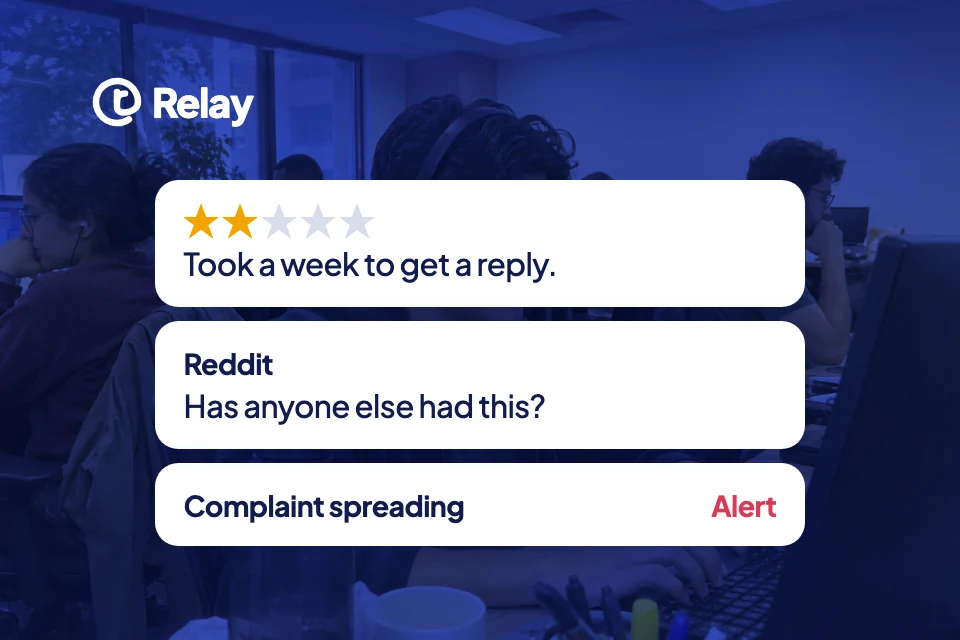
Relay puts your reviews, public posts, private messages and email in one queue, gives each one an owner and a clock, warns you when a complaint starts to spread, and leaves every reply to a person. It is an early product. This post says plainly what it does and what it doesn't.
Public complaints often get no answer. In a vendor study by UENI, which sells websites to small businesses, owners replied to 9.8% of one-star Google reviews and 29.3% of five-star ones, and one-star replies took 19.5 days on average. That covers 229,882 reviews from UENI's own customers, so take it as a signal.
Replies are worth having. Hotels that started responding gained about 0.12 stars and 12% more reviews in one well known study. And public failures have a cost that reaches beyond one customer: Cursor's support bot invented a policy, and some customers cancelled.
In our experience the trouble is often structural. Reviews sit with marketing or location managers, social with the brand team, tickets with support. The person who can fix a late delivery may never see the post. We built Relay to close that gap, and to do it without handing the conversation to a bot.
One queue. Reviews from Google Business Profile, the App Store and Google Play. Posts from X, Reddit, YouTube, Hacker News, Bluesky and Google News. Quora through search. Instagram, Facebook, WhatsApp and Telegram through webhooks. Email by forwarding, Gmail or Outlook. Many of these need a token or API key before they work, and Relay shows which are connected.
Every item labelled. Sentiment, graded intensity, sarcasm, category, priority and route, using rules that read English today. A complaint phrased as thanks is read as a complaint when the words give it away.
An owner and a clock. Tickets get SLA timers with warnings and breaches, escalation tiers, and an event log. Category, SLA and threshold settings can be changed without a release.
A person on every reply. Relay starts a draft and a person edits and sends it. Refunds, payments and requests for a human are routed to people by rule. There is no path by which Relay posts on its own.
Honest delivery status. If a channel isn't connected, the send is marked simulated, in the log and under the message. Channels that can't do something say so.
Crisis alerts that explain themselves. Relay learns normal volume per theme and scores spikes on six signals: deviation from baseline, velocity, concentration, sentiment intensity, amplification and spread across platforms. Alerts go to the app, Slack, webhooks (signed once a signing secret is set), or email once an email key is set. Each one shows why it fired.
Numbers from real tickets, once you have 20 or more. First response time, turnaround, SLA attainment, sentiment turnaround, reopen rate and share of voice, with CSV export and scheduled reports.
For the step-by-step version, read how Relay works.
Where it runs matters too. Relay is two Node services that keep data in files on the server, so it can sit on infrastructure you control. It needs a host with a lasting disk. A managed database is still to come.
Relay's labels are rules written by people, and we haven't published accuracy figures for them. We would be wary of any vendor's accuracy number that doesn't say what it measured, including ours when we publish one. So run your own test. Take 50 real complaints from the last month, including the sarcastic ones and the ones in other languages, and see how the labels and routes compare with what your best agent would do.
The same goes for speed. A person on every reply is the safest setting and the slowest one, and we think that is the right trade for public complaints and money. If a person takes two days to reach the review, the customer has the same complaint with a nicer interface. So watch time to first reply and reopen rate from the first week. If those don't improve, tell us, and consider whether the tool is the issue or the staffing is.
One more limit worth saying out loud. Relay can get a complaint in front of the right person faster. It can't change a refund policy that customers think is unfair, or fix the late deliveries behind the complaints. Those stay with you. Tag causes monthly, and take the top one to whoever can change it.
| Your situation | Is Relay a fit |
|---|---|
| Public complaints go unanswered and you want them with your tickets | Yes |
| Several locations or dealers, and complaints need routing to the right one | Yes, with dealer routing on car brand workspaces only |
| You want a person on every outbound reply | Yes |
| You want early warning when one complaint theme is climbing | Yes |
| You need a bot to answer customers today | No. Choose a helpdesk with an AI agent |
| You need web chat and a help centre | No. Choose a dedicated helpdesk |
| Your customers mostly write in languages other than English | Not yet |
| You need phone support in the same tool | No |
A small business with one location doesn't need Relay. A shared inbox and the online reputation management steps will do the job, and our Google reviews guide costs nothing to follow.
Tell us your channels and where complaints get stuck, and we will tell you plainly what would work and what wouldn't. We set it up with you and connect your channels. Contact us.
We set it up with teams directly. Contact us and tell us which channels you use, and we will tell you what is connected and what isn't.
It starts a draft from templates for each category, and a person edits and sends every reply. There is no automatic posting. Drafts don't yet read your policy documents.
Yes. It is two Node services that store data in files, so it can run on a server you control. It needs a host with a lasting disk, and a managed database isn't built yet.
Hacker News, Bluesky, Google News and store reviews can be collected with little setup. Reddit needs your own API credentials, and Google Business, X, Meta channels, Gmail and Outlook need tokens or keys. Relay shows which are live.
Probably not if you rely on web chat, a help centre or order actions, because Relay has none of those today. It works best alongside or instead of a shared inbox when public complaints are the main gap.
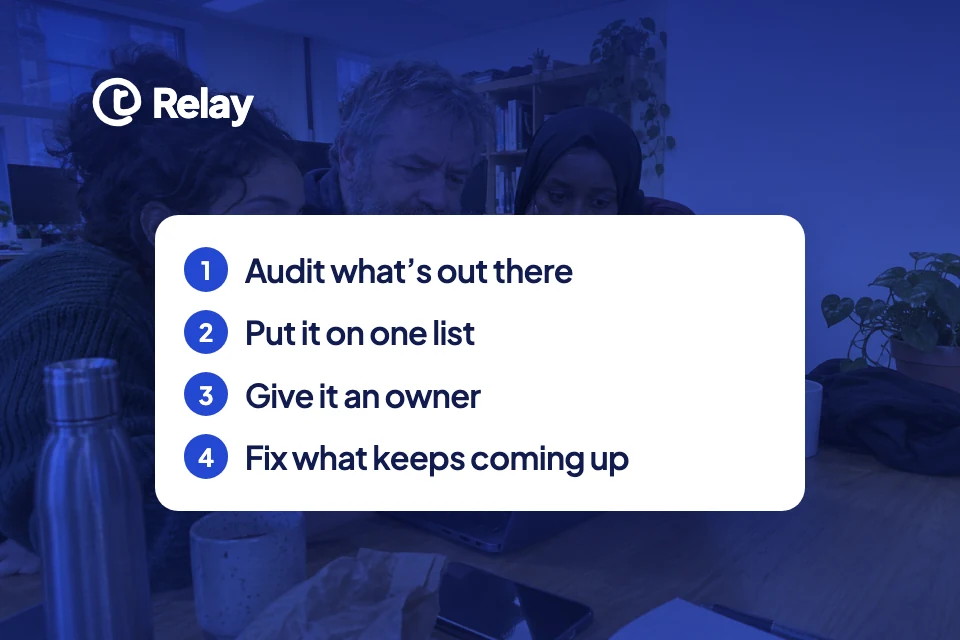 GuidesHow to do online reputation management, step by stepFind what people say about your business, answer it within the rules, fix what caused it. A plan, a triage table and replies you can copy.9 November 2026 · 11 min read
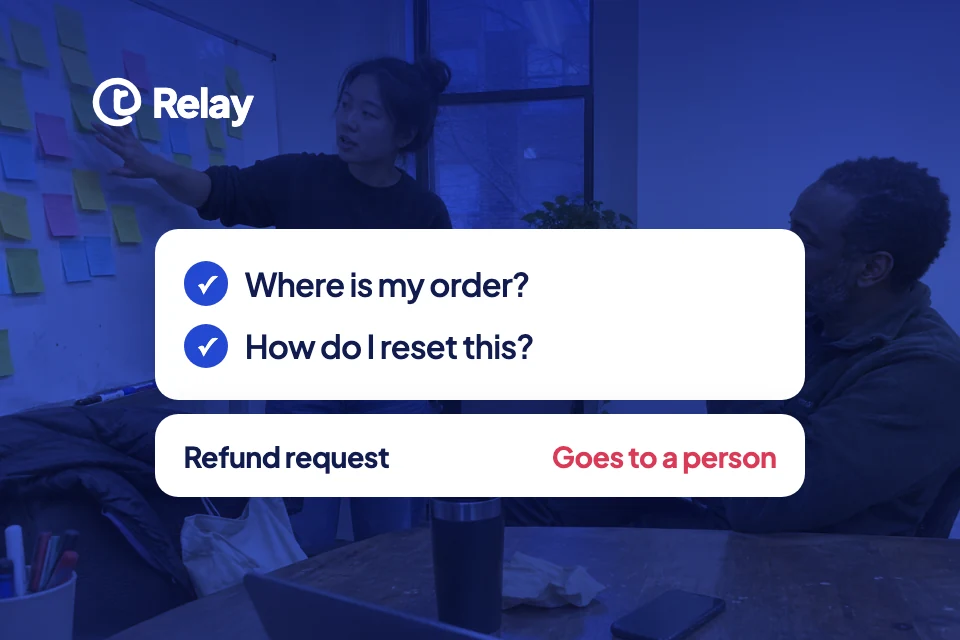 GuidesHow to automate customer support without trapping your customersWhat to automate, what to keep with a person, what the law says about AI disclosure, and how to tell whether automation is really working.9 November 2026 · 12 min read
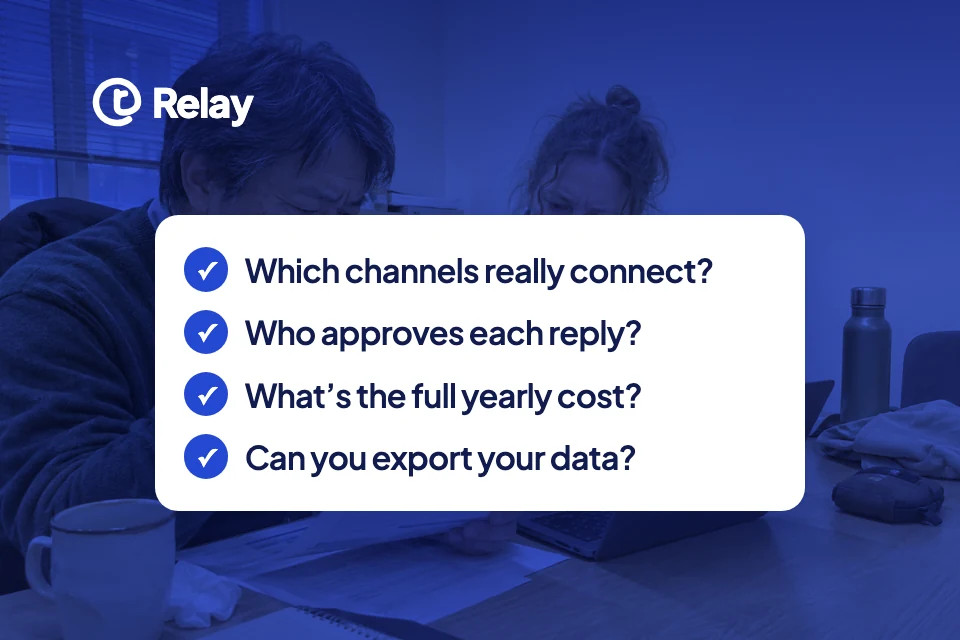 GuidesOnline reputation management software: what to check before you buyEight checks for choosing reputation software, with a cost worksheet, published vendor prices, review rules by market and sales call questions.9 November 2026 · 12 min read
Get a personalised 30 minute demo on your own channels and policies. We show you Relay handling your real conversations, then set it up with you.
Brands we work with